
An Intrusion Detection System in IIoT Networks Based on Decision Trees and Neighborhood Component Analysis (NCA)
DOI:
https://doi.org/10.51173/eetj.v3i2.36Keywords:
Industrial IoT, Intrusion Detection, NCA Algorithm, ASDT AlgorithmAbstract
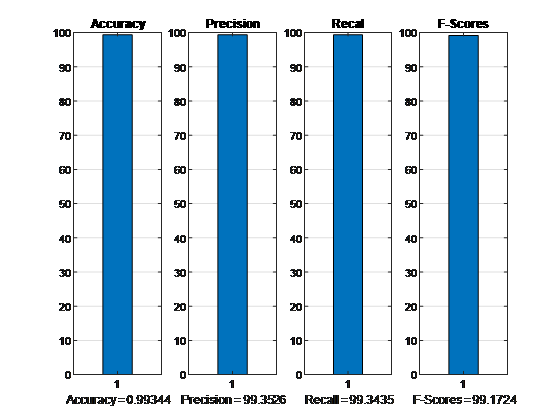
The rapid expansion of Industrial Internet of Things (IIoT) networks has significantly increased the vulnerability of industrial systems to diverse cyber-attacks. Therefore, designing an intelligent and adaptive intrusion detection model capable of handling high-dimensional, streaming, and dynamically evolving network data is essential. In this paper, we propose a novel intrusion detection framework based on the Adaptive Streaming Decision Tree (ASDT) algorithm integrated with Neighborhood Component Analysis (NCA) for optimal feature selection. First, a preprocessing stage is applied to the NSL-KDD and UNSW-NB15 benchmark datasets, including data normalization and outlier removal, to enhance data consistency and reduce noise. Then, NCA-based feature selection is employed to identify the most discriminative attributes, effectively reducing computational complexity and improving classification performance. Finally, the selected features are fed into the proposed ASDT classifier, which incrementally learns from network traffic streams and dynamically adapts to concept drift through a forgetting-factor mechanism and online entropy-based splitting criteria. Experimental results demonstrate that the proposed method achieves outstanding detection performance, with an average accuracy of 99.34% on the NSL-KDD dataset and 99.02% on the UNSW-NB15 dataset, outperforming conventional decision tree and ensemble-based intrusion detection models. The results confirm that the proposed ASDT-NCA framework provides a robust, interpretable, and adaptive solution for real-time IIoT network intrusion detection.
References
Hamouda D, Ferrag MA, Benhamida N, Seridi H. Intrusion detection systems for industrial internet of things: A survey. In2021 International Conference on Theoretical and Applicative Aspects of Computer Science (ICTAACS) 2021 Dec 15 (pp. 1-8). IEEE.
Nuaimi M, Fourati LC, Hamed BB. Intelligent approaches toward intrusion detection systems for Industrial Internet of Things: A systematic comprehensive review. Journal of Network and Computer Applications. 2023 Jun 1;215:103637.
Soliman S, Oudah W, Aljuhani A. Deep learning-based intrusion detection approach for securing industrial Internet of Things. Alexandria Engineering Journal. 2023 Oct 15;81:371-83.
Lu Y, Chai S, Suo Y, Yao F, Zhang C. Intrusion detection for Industrial Internet of Things based on deep learning. Neurocomputing. 2024 Jan 7;564:126886.
Mendonça RV, Silva JC, Rosa RL, Saadi M, Rodriguez DZ, Farouk A. A lightweight intelligent intrusion detection system for industrial internet of things using deep learning algorithms. Expert Systems. 2022 Jun;39(5):e12917.
Gopi R, Sheeba R, Anguraj K, Chelladurai T, Alshahrani HM, Nemri N, Lamoudan T. Intelligent Intrusion Detection System for Industrial Internet of Things Environment. Computer Systems Science & Engineering. 2023 Feb 1;44(2).
Li J, Othman MS, Chen H, Yusuf LM. Optimizing IoT intrusion detection system: feature selection versus feature extraction in machine learning. Journal of Big Data. 2024 Feb 24;11(1):36.
Alanazi R, Aljuhani A. Anomaly Detection for Industrial Internet of Things Cyberattacks. Computer Systems Science & Engineering. 2023 Mar 1;44(3).
Shahin M, Chen FF, Hosseinzadeh A, Bouzary H, Rashidifar R. A deep hybrid learning model for detection of cyber attacks in industrial IoT devices. The International Journal of Advanced Manufacturing Technology. 2022 Nov;123(5):1973-83.
Khan F, Alturki R, Rahman MA, Mastorakis S, Razzak I, Shah ST. Trustworthy and reliable deep-learning-based cyberattack detection in industrial IoT. IEEE transactions on industrial informatics. 2022 Jul 13;19(1):1030-8.
Huma ZE, Latif S, Ahmad J, Idrees Z, Ibrar A, Zou Z, Alqahtani F, Baothman F. A hybrid deep random neural network for cyberattack detection in the industrial internet of things. IEEE access. 2021 Apr 8;9:55595-605.
Golchha R, Joshi A, Gupta GP. Voting-based ensemble learning approach for cyber attacks detection in Industrial Internet of Things. Procedia Computer Science. 2023 Jan 1;218:1752-9.
Souri A, Norouzi M, Alsenani Y. A new cloud-based cyber-attack detection architecture for hyper-automation process in industrial internet of things. Cluster Computing. 2024 Jun;27(3):3639-55.
Sarjan H, Ameli A, Ghafouri M. Cyber-security of industrial internet of things in electric power systems. IEEE Access. 2022 Aug 29;10:92390-409.
Soliman S, Oudah W, Aljuhani A. Deep learning-based intrusion detection approach for securing industrial Internet of Things. Alexandria Engineering Journal. 2023 Oct 15;81:371-83.
Awotunde JB, Chakraborty C, Adeniyi AE. Intrusion Detection in Industrial Internet of Things Network‐Based on Deep Learning Model with Rule‐Based Feature Selection. Wireless communications and mobile computing. 2021;2021(1):7154587.
Latif S, Idrees Z, Zou Z, Ahmad J. DRaNN: A deep random neural network model for intrusion detection in industrial IoT. In2020 international conference on UK-China emerging technologies (UCET) 2020 Aug 20 (pp. 1-4). IEEE.
Khan IA, Keshk M, Pi D, Khan N, Hussain Y, Soliman H. Enhancing IIoT networks protection: A robust security model for attack detection in Internet Industrial Control Systems. Ad Hoc Networks. 2022 Sep 1;134:102930.
Mendonça RV, Silva JC, Rosa RL, Saadi M, Rodriguez DZ, Farouk A. A lightweight intelligent intrusion detection system for industrial internet of things using deep learning algorithms. Expert Systems. 2022 Jun;39(5):e12917.
Mousa'B MS, Hasan MK, Sulaiman R, Islam S, Khan AU. An explainable ensemble deep learning approach for intrusion detection in industrial Internet of Things. IEEE Access. 2023 Oct 10;11:115047-61.
Mazziotta M, Pareto A. Normalization methods for spatio‐temporal analysis of environmental performance: Revisiting the Min–Max method. Environmetrics. 2022 Aug;33(5):e2730.
Malan NS, Sharma S. Feature selection using regularized neighbourhood component analysis to enhance the classification performance of motor imagery signals. Computers in biology and medicine. 2019 Apr 1;107:118-26.
Rutkowski L, Jaworski M, Pietruczuk L, Duda P. The CART decision tree for mining data streams. Information Sciences. 2014 May 10;266:1-5.
The KDD99 Dataset. Retrieved January 26, 2008, from http://kdd.ics.uci.edu/databases/kddcup99/task.html
M. Tavallaee, E. Bagheri, W. Lu, Ali A. Ghorbani, “A Detailed Analysis of the KDD CUP 99 Data Set”, in: Proceedings of the 2009 IEEE Symposium on Computational Intelligence in Security and Defense Applications (CISDA 2009).
Kumar P, Gupta GP, Tripathi R. Toward design of an intelligent cyber attack detection system using hybrid feature reduced approach for iot networks. Arabian Journal for Science and Engineering. 2021 Apr;46:3749-78.
E. M. Roopa Devi, R. C. Suganthe, “Improved Relevance Vector Machine (IRVM) classifier for Intrusion Detection System”, Soft Computing (2018)
Downloads
Published
How to Cite
Issue
Section